








Play is a right, not an option.
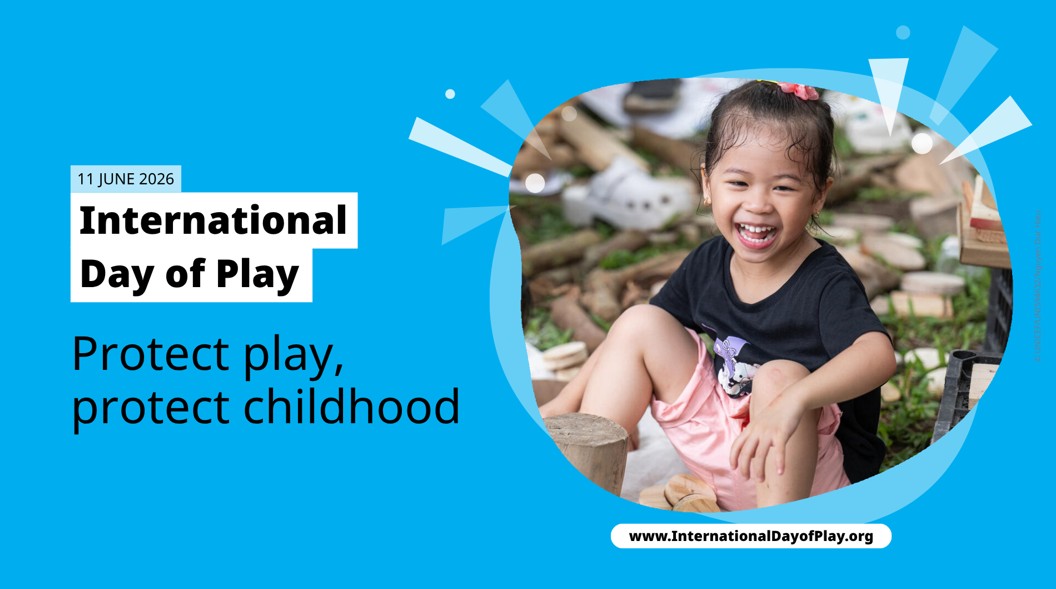
On International Day of Play, we take a look at what this right really means, why it is so valuable and how it is being progressed in Jersey.
Today is International Day of Play. On the surface, it’s an easy thing to support. Who could be against children playing?
And yet, play is one of those areas where warm words often outpace meaningful action.
That’s precisely why it matters that play is not just a ‘nice idea’ or a lifestyle choice. It is a right.
Under Article 31 of the United Nations Convention on the Rights of the Child, every child has the right to rest and leisure, to engage in play and recreational activities appropriate to the age of the child. Not encouraged. Not facilitated if convenient. Guaranteed.
For a Children’s Commissioner’s Office, that framing matters. Because rights change the conversation. They move us from ‘wouldn’t it be good if…’ to ‘what are we doing to make this real?’
What children tell us – when we listen
When we speak to children and young people in Jersey, they rarely frame things in legal terms. They don’t cite Article 31. But they do describe, very clearly, what it looks like when that right is not being met.
They talk about not having anywhere to go. About being moved on. About feeling unwelcome in public spaces. About spending more time indoors than they would like.
And they talk, consistently, about wanting more freedom: to go out, to meet friends, to just be.
This isn’t trivial. It is lived experience of a right that is being constrained – not necessarily deliberately, but certainly cumulatively. From financial barriers or lack of opportunity through to the all-pervasive effects of planning decisions, traffic, lack of accessible spaces, and sometimes simply a failure to see children as equal users of the Island.
Play is where rights come together
Play is often misunderstood as something separate from the ‘serious’ business of children’s lives. In reality, though, it is where many rights intersect.
Through play, children build relationships (Article 15), develop physically and mentally (Article 6), express themselves (Article 13), and participate in community life (Article 12).
Reduce opportunities for play, and you don’t just lose play – you narrow the conditions that allow children to thrive.
That is why international bodies have repeatedly highlighted play as a critical but under-protected area of children’s rights. Not because it is marginal, but because it is foundational.
Jersey has recognised the right – on paper
Jersey’s recently developed Play Plan is an important step forward. It reflects an understanding that play doesn’t just happen in designated playgrounds, but across the whole fabric of the Island – in streets, green spaces, schools and neighbourhoods.
It also reflects something else that matters: children’s voices. The plan aligns closely with what young Islanders have been telling us for years about needing accessible, inclusive, everyday opportunities to play.
That is why Play and Leisure is one of the thematic areas identified in our Strategic Plan 2024-2027
A test of intent for a new government
Jersey has just elected a new Assembly. With that comes the usual sense of reset – new priorities, new energy, a chance to signal what matters.
The Play Plan now sits squarely in that moment.
As things stand, there has been no clearly identified, ring-fenced funding to deliver the plan’s ambitions. And while funding is often treated as a technical detail, in rights terms it is anything but.
Because a right without the means to realise it risks becoming rhetorical.
If we say children have a right to play – but do not invest in the conditions that make play possible – what we are really saying is that the right is conditional.
And that is not how rights work.
What taking Article 31 seriously looks like
Taking the right to play seriously does not require grand gestures. It requires steady, visible commitment.
It means investing in everyday spaces, ensuring inclusion so that all children – not just some – can take part.
It also means a shift in mindset: seeing children and young people not as problems to manage in the public realm, but as rights-holders with a legitimate claim to it.
Because at its core, play is about more than activity. It is about belonging.
Belonging to a community. Belonging in public space. Belonging now – not just as future adults.
Why this matters now
International Day of Play exists because, globally, this right is under pressure. Opportunities for play are shrinking, even as the evidence of its importance grows stronger.
In Jersey, we are not starting from scratch. We have listened. We have a plan. We understand, at least in principle, what needs to happen.
The question is whether we will now treat play as what it is: a fundamental part of children’s rights, not a discretionary extra.
Because if we believe that children’s rights should be real, lived and visible in Jersey, then Article 31 cannot sit quietly in the background.
It has to show up in budgets, in Ministerial portfolios and in the everyday design of our Island.
Children have told us what they need.
A rights-based approach asks a simple follow-up question:
What are we going to do about it?